Choosing the Right Spray Nozzles from Tractor Supply: A Guide to Maximizing Your Harvest
Getting the most from your crop spraying hinges on selecting and maintaining the proper spray nozzles. This guide provides practical steps to choose the best nozzles from Tractor Supply, optimize your sprayer, and boost your yields. We'll cover nozzle types, calibration, maintenance, and best practices for different crops and conditions. For more sprayer information, check out this helpful resource: sprayer boom guide.
Understanding Your Spray Nozzle Options at Tractor Supply
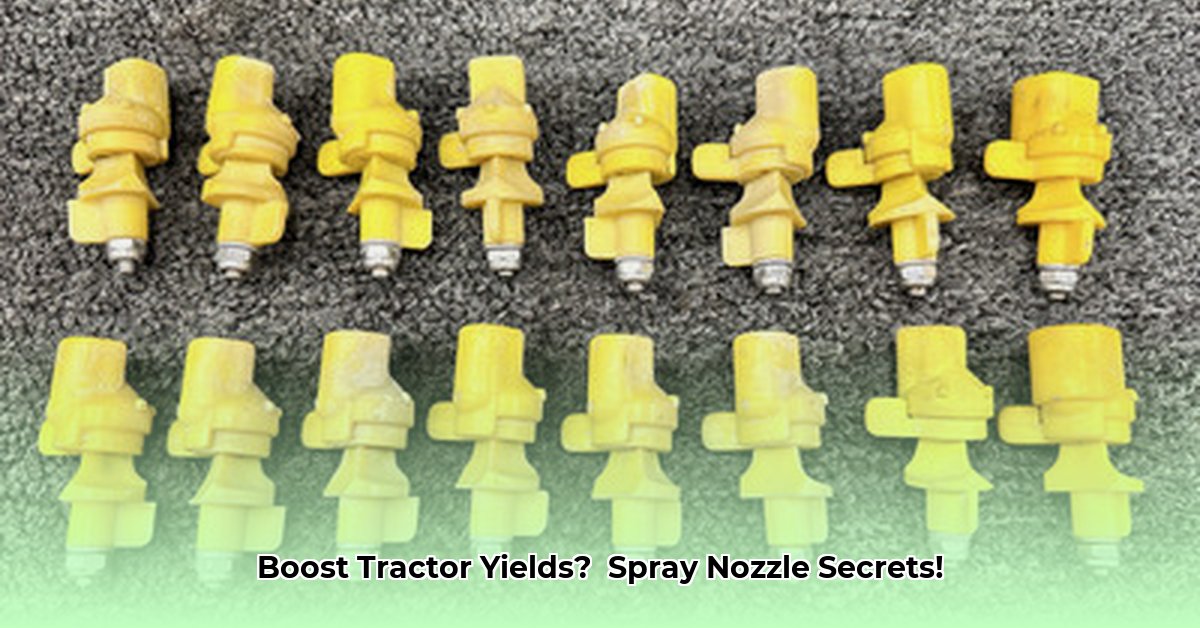
Tractor Supply offers a variety of spray nozzles, each designed for specific applications. Selecting the right nozzle ensures efficient chemical use, minimizes drift, and maximizes crop coverage. Three primary nozzle types stand out: flat fan, hollow cone, and air induction.
| Nozzle Type | Spray Pattern Description | Best Uses | Advantages | Disadvantages |
|---|---|---|---|---|
| Flat Fan | Rectangular, even distribution | Row crops, herbicides, fungicides | Consistent coverage, reduced drift | Less effective on uneven terrain, hills, or slopes |
| Hollow Cone | Circular, cone-shaped, hollow center | Broadleaf weeds, insecticides, foliar feeding | Good penetration, minimizes runoff | Can be uneven, greater risk of drift than flat fan |
| Air Induction | Very fine droplets, minimizes drift | Herbicides, sensitive crops, windy conditions | Significantly minimizes drift, ideal for delicate plants | Requires higher pressure, more complex design |
Quantifiable Fact: Studies show that using the correct nozzle type can increase spray efficiency by up to 20%, resulting in significant chemical cost savings.
Matching Nozzles to Your Crops and Conditions
Nozzle selection depends heavily on the crop, target pest or disease, chemical used, and weather conditions. Consider these factors:
- Crop Size and Density: Dense crops need nozzles with sufficient penetration to reach all foliage. Shorter crops may require different nozzles to avoid waste and runoff.
- Target: Different pests and diseases respond differently to various spray patterns and droplet sizes. Some need broader coverage, while others require more concentrated application.
- Spray Chemical: Chemical type (water-based, oil-based) influences nozzle compatibility. Some chemicals might clog specific nozzles more readily.
- Weather: Wind and humidity impact drift. On windy days, low-drift nozzles are essential to prevent pesticide loss and environmental protection.
Rhetorical Question: Are you maximizing your spray application with the correct nozzle for your specific crop and environmental factors?
Calibrating Your Sprayer for Optimal Performance
Accurate calibration ensures consistent application and prevents waste. Follow these steps:
- Measure Spray Width: Precisely measure the width your sprayer boom covers.
- Collect Spray Output: Use a calibrated container to collect the spray output over a set time and distance.
- Calculate Spray Rate: Divide the collected volume by the collection time to determine gallons per minute (GPM). This is your current spray rate.
- Adjust and Repeat: Compare your calculated rate with the desired application rate (GPA). Adjust pressure, speed, or nozzle settings as needed, then repeat steps 2 and 3 until the correct spray rate is achieved.
Expert Quote: "Proper calibration is paramount for efficient spraying," says Dr. Emily Carter, Agricultural Engineer at Purdue University. "Inconsistent spraying leads to wasted chemicals and reduced yields."
Nozzle Maintenance: Ensuring Long-lasting Performance
Regular maintenance prevents clogs and ensures optimal performance.
- Regular Inspections: After each use, inspect nozzles for clogs or damage. A quick visual check can prevent significant issues.
- Thorough Cleaning: Backflush with clean water for most clogs. For stubborn clogs, use a compatible nozzle cleaning solution. Avoid harsh chemicals that might damage the nozzle.
- Replacement: Replace worn nozzles promptly to maintain even spraying and optimal efficacy.
Key Takeaways:
- Choosing the right nozzle significantly impacts spraying efficiency and yield.
- Different nozzle types offer unique spray patterns for varied needs.
- Understanding application rate (GPA) and flow rate (GPM) is critical for precise application.
- Consider nozzle material compatibility with chemicals used.
- Tractor Supply provides a wide range of nozzles to suit diverse needs and budgets.
By following these steps, you can optimize your spraying operation, minimize waste, improve crop health, and achieve a greater return on your investment. Remember, a little planning and proactive maintenance makes a substantial difference in your overall spraying efficiency.